
No sandal offers a universal solution for plantar fasciitis. Medical recommendations emphasize the importance of appropriate arch supports, which are often absent in summer models. Some manufacturers, like Billowy and Birkenstock, claim specific features to meet these needs.
The design differences between these two brands raise crucial choices for those sensitive to foot pain. Anatomical insoles, heel support, materials used: every technical detail influences daily comfort, as well as the prevention of recurrences.
Understanding plantar fasciitis: why the choice of sandal is crucial for your feet
Plantar fasciitis has become the bane of podiatrists, affecting indiscriminately those who put a bit too much strain on their feet. This sharp and sometimes debilitating pain arises from inflammation of the plantar fascia, the ligament that connects the heel to the base of the toes. To alleviate this suffering, the choice of sandal is a matter of biomechanical necessity rather than just summer style.
An anatomical insole can make all the difference. When a sandal provides firm support for the arch, it distributes weight, relieves tension on the fascia, and allows for foot relief from the very first steps. The materials used, such as cork, latex, and leather, are not merely aesthetic choices: they play a direct role in support, shock absorption, and comfort. A well-supported foot quickly regains its ease, even after a long day on your feet.
Experts agree: the question “which sandals to choose for plantar fasciitis” is no longer just a matter of taste but requires specialized knowledge. To explore all the subtleties, the comparison Billowy vs Birkenstock reviews highlights the design differences and effectiveness of each brand. Observing every detail—support, flexibility, adaptation to morphology—allows for the selection of a sandal truly suited to your daily life.
Billowy or Birkenstock: which sandals offer the best comfort and support for everyday use?
The balance between comfort and support guides the choice of anyone facing plantar fasciitis. Here, there is no room for chance or fleeting fashion: only the technical qualities that ensure reliable support day after day matter. The anatomical insole, often made of cork or latex cork, conforms to the shape of the foot, absorbs shocks, and follows the natural movement of walking. This specificity, present in industry leaders, guarantees effective support for the arch.
Distinctive features
Here are the essential elements to evaluate in this type of sandal:
- The cork anatomical insole provides appreciable comfort from the very first day, as it gradually adapts to the shape of the foot.
- Leather, used in the lining or straps, ensures breathability, durability, and elegance while minimizing unpleasant friction.
- Soft and cushioned soles reduce pressure on the fascia, alleviating pain and promoting recovery.
The casual chic look is no longer just about aesthetics: it must also support the technique. A well-designed sandal can be worn both in the city and at home, without sacrificing either style or foot health. The longevity will directly depend on the quality of the chosen materials and the care given to every detail of construction. The sturdiness of the sole, the choice of accessories: every criterion matters to maintain comfort and limit the risk of recurrence while showcasing a confident style.
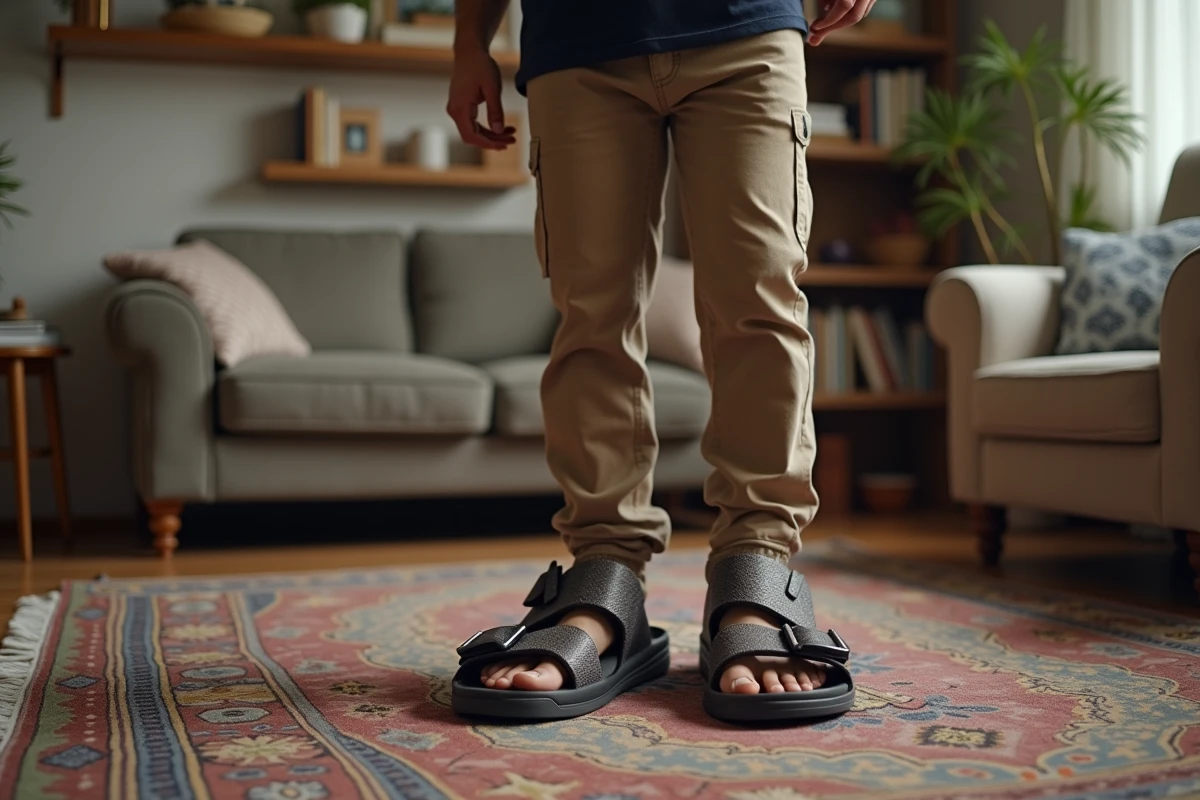
Practical tips for choosing according to your needs and fully enjoying your sandals
Assessing use, morphology, and environment
Every foot has its journey, and when plantar fasciitis strikes, it becomes urgent to adapt your footwear. An appropriate pair must respect your morphology and fit your lifestyle habits. The arch support remains the central element of a wise choice. Whether it’s an orthopedic insole or a so-called anatomical insole, the important thing is to guide the foot, absorb shocks, and limit tension on the plantar ligament.
Several criteria should be considered to refine your selection:
- For regular use, ensure that the straps are sturdy and well-attached. A stable model reduces the risk of missteps and secures your movements.
- For growing children, prioritize sandals that are both flexible and structured: they support development and do not hinder walking.
- For active adults, the priority is the balance between comfort, support, and style. The shoe’s ergonomics should never be sacrificed.
The choice of materials is crucial: leather for adaptability, cork for effective cushioning, rubber for moisture resistance. Tailor your selection to your environment, whether urban or natural, and to the frequency of use. Sometimes it is necessary to invest in quality to avoid premature wear and ensure lasting support.
Style still holds its place. Opt for versatile models that can keep up with the pace of your days without compromising your foot health. Accessories are not just for appearance: an additional strap stabilizes, and well-placed padding enhances comfort. These are the details that make all the difference and transform a sandal into a reliable partner, capable of facing the longest days without faltering.