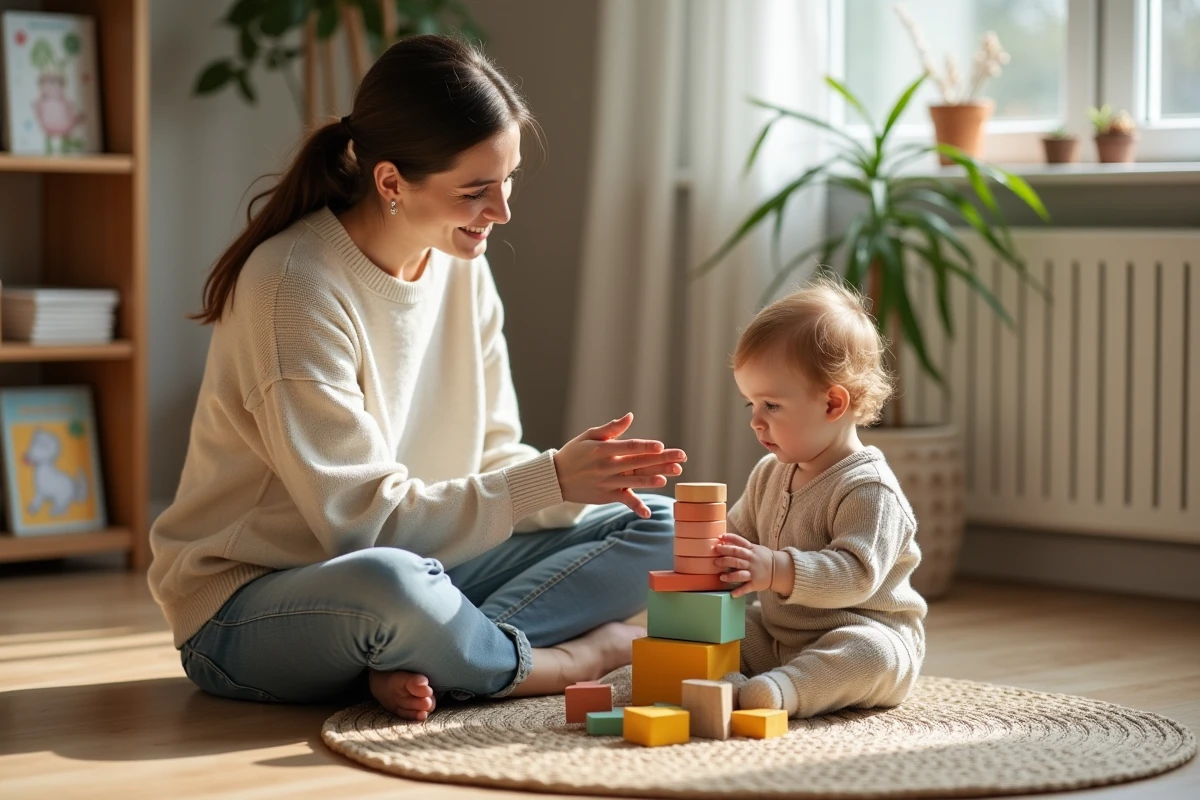
What type of stimulation produces a measurable effect on a toddler’s development, and which is more of a parental myth? This question is worth asking given how similar the developmental guides are, with their lists of sensory games and age-specific recommendations. A baby’s development relies on precise mechanisms documented by early childhood research, and certain familiar contexts (bilingualism, cultural diversity) significantly alter the way these mechanisms operate.
Development and Stimulation Activities: What Comparative Approaches Reveal
The activities offered to toddlers are not all equal in terms of psychomotor and language development. Some simultaneously engage multiple areas, while others focus on a single aspect.
| Type of Activity | Main Area Engaged | Secondary Area | Suitable From |
|---|---|---|---|
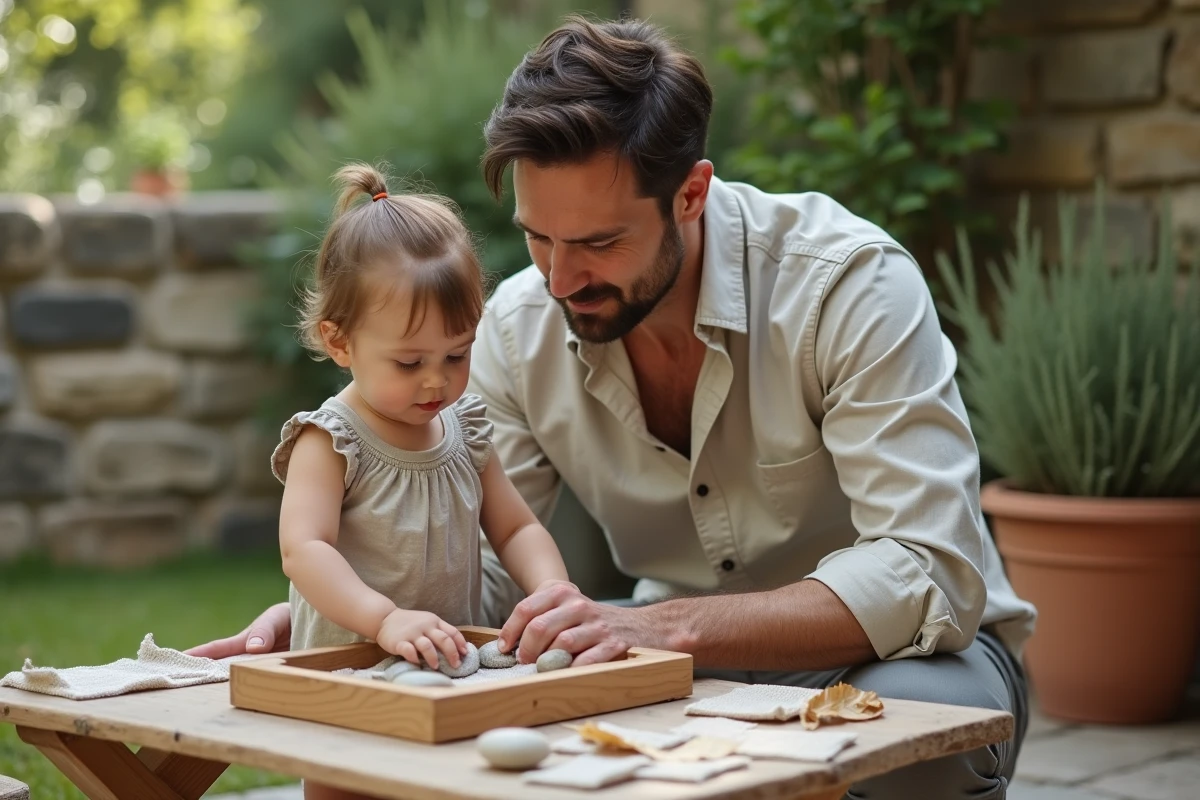
| Manipulating objects with varied textures | Sensory stimulation (touch) | Fine motor skills | 3 months |
| Action songs with gestures | Language and rhythm | Gross motor skills, social connection | 6 months |
| Free play without instructions | Autonomy, exploration | Creativity, problem-solving | 9 months |
| Reading illustrated books | Vocabulary, joint attention | Emotional awakening | 6 months |
| Water play (pouring) | Sensory discovery | Hand-eye coordination | 12 months |
| Singing in a second language | Phonetic discrimination | Cultural openness, memory | From birth |
The table reveals a notable gap: activities that combine language and gesture (nursery rhymes, bilingual songs) activate more areas simultaneously than simple object manipulation. This observation guides the rest of the analysis.
Specialized resources like Petits Bambins help parents find activity ideas suited to each stage of a child’s development, taking into account this plurality of areas.
Bilingual and Multicultural Stimulation in Toddlers: An Underutilized Lever
The majority of developmental guides assume that the child grows up in a monolingual environment. This approach overlooks a documented fact: early exposure to two languages sharpens the infant’s phonetic discrimination, even for sounds absent from their mother tongue.
Specifically, a baby regularly exposed to nursery rhymes or conversations in a second language develops an auditory flexibility that their monolingual peers do not acquire at the same pace. This is not a question of future academic performance, but of brain plasticity during the first months of life.
Adapting Stimulation Activities in a Bilingual Context
A common mistake is to strictly separate languages by activity or by parent. Language acquisition research shows that controlled mixing (a nursery rhyme in French followed by the same melody in Arabic, Portuguese, or sign language) does not create confusion. On the contrary, it enhances the toddler’s ability to identify common structures between languages.
- Associating a daily object with its name in two languages during free play, without forcing repetition, allows the child to build their own associations
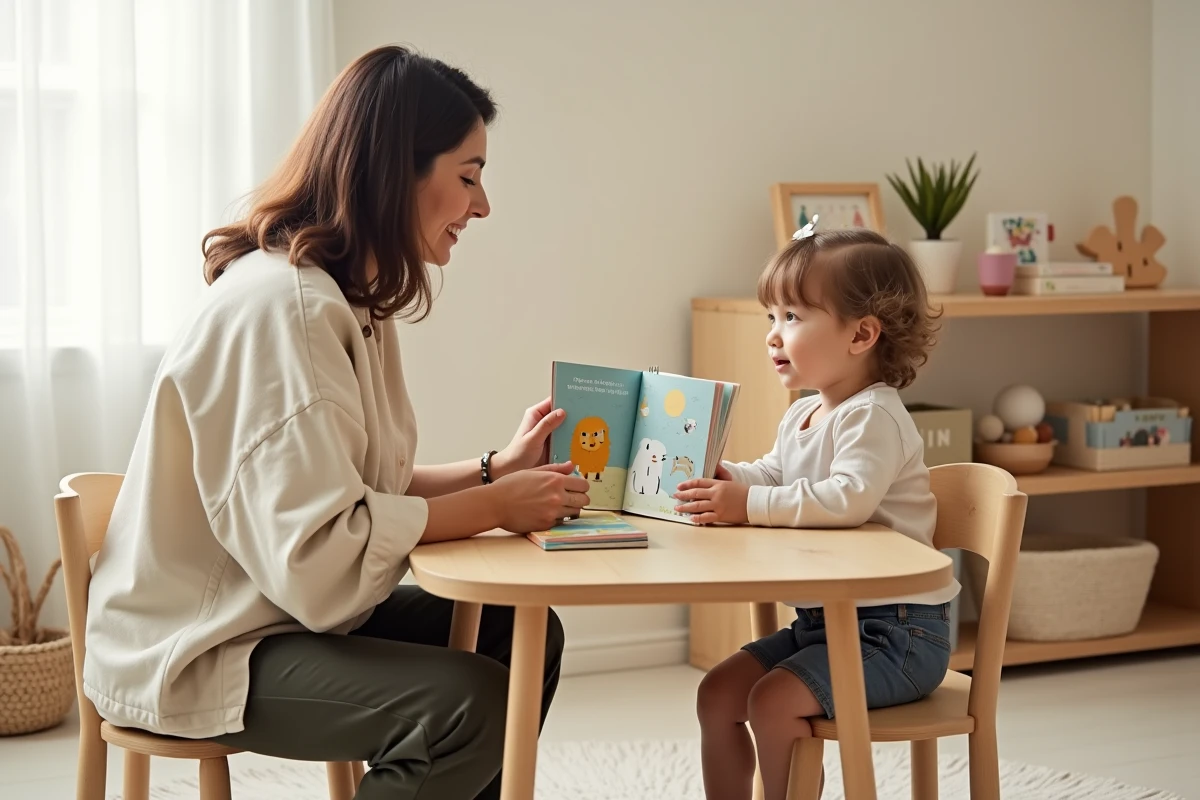
- Using illustrated books without text enables each adult to tell the story in their own language, providing the baby with two distinct prosodic models
- Integrating lullabies or finger games from different cultural traditions diversifies rhythmic and melodic stimulation
Multicultural stimulation does not require parents to be bilingual themselves. Audio recordings, occasional interactions with relatives speaking another language, or attending a multicultural childcare facility are sufficient to expose the child to this auditory diversity.
The Role of Emotional Stimulation in Early Development
Decree No. 2025-247 of March 15, 2025, regarding the training of childcare assistants, has made modules on emotional stimulation and resilience mandatory. This regulatory evolution reflects a shared observation among early childhood professionals: emotional development conditions the quality of all other learning.
A child whose emotional signals are identified and supported (crying, smiling, gazing) develops their ability for joint attention more quickly, meaning their capacity to share a common interest with an adult. This joint attention is the foundation for language learning and socialization.
Concrete Practices to Support Emotional Stimulation
Free play, without a defined objective set by the adult, remains the most conducive environment. When a nine-month-old baby stacks cups and then knocks them over, they are not just “playing” with gravity. They are experiencing frustration, surprise, satisfaction, and observing the adult’s reaction.
Naming the observed emotion without judgment (“you look surprised,” “that made you laugh”) helps the toddler gradually build their emotional vocabulary. This practice, seemingly simple, requires the adult to resist the temptation to direct the play or propose a solution.
Free Movement and Stimulation Activities: Why Fewer Accessories Yield Better Results
The accumulation of developmental toys in a baby’s play space often produces the opposite effect of what is intended. An overloaded environment disperses attention and reduces the duration of exploration of each object. Three to four objects are sufficient for a productive free play session for a child under eighteen months.
Free movement, a concept developed by pediatrician Emmi Pikler, is based on the idea that a child does not need to be placed in a position they have not yet mastered. A baby placed on their back, with a few objects within reach, develops their gross motor skills by trying to reach them, roll over, and then crawl.
In contrast, a child propped up in a seat or walker has their freedom of movement restricted, which slows down the acquisition of motor milestones. The adult’s role is then to secure the space and observe, rather than physically guiding the toddler’s movements.
Supporting a child’s awakening should be viewed not as a checklist of activities to complete, but as a continuous adjustment to their reactions. The best indicator remains the baby’s gaze: if they fixate on an object, reach out, or vocalize, the activity corresponds to their developmental stage. If they turn their head away, the signal is just as clear.