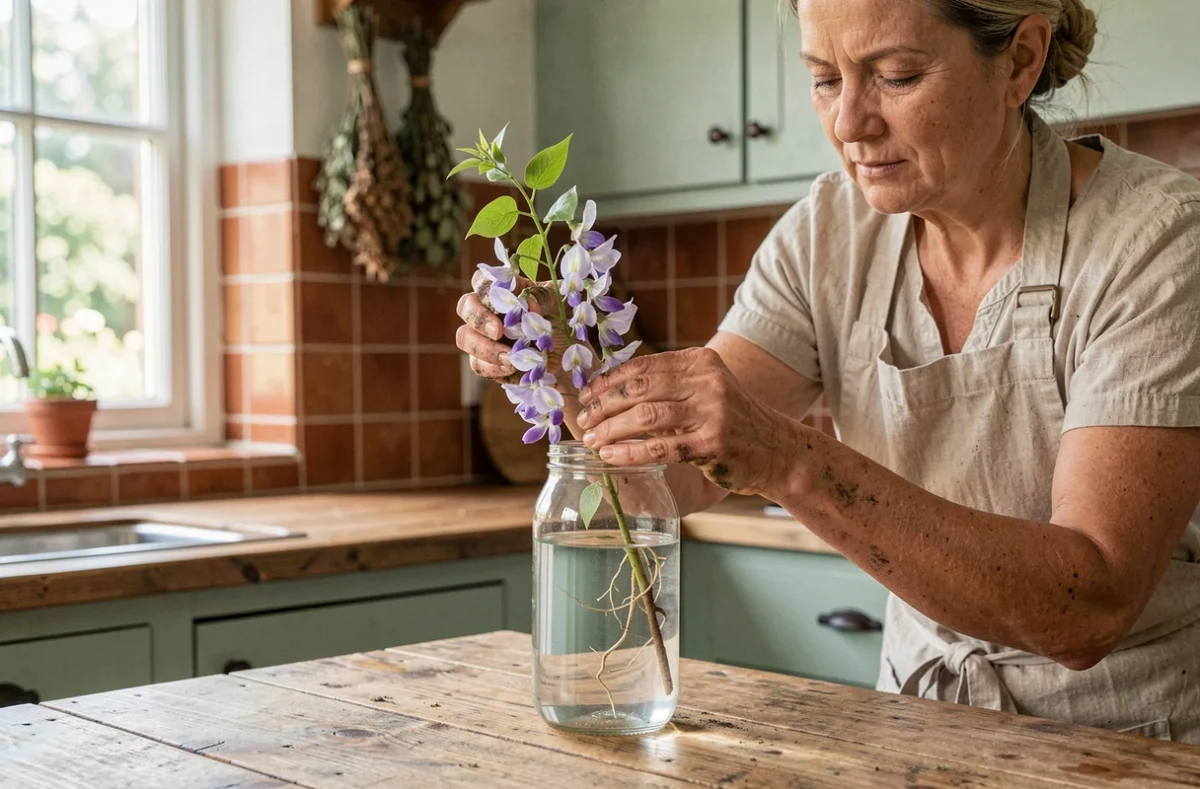
Wisteria is a woody climbing plant, and this characteristic changes everything when it comes to water propagation. Unlike pothos or monsteras, whose soft stems easily develop aquatic roots, wisteria (Wisteria) has semi-hardwood stems that poorly tolerate prolonged immersion. Understanding this peculiarity allows for adapting the method and avoiding the most common failure: root rot before any roots appear.
Wisteria cutting in water or substrate: limits and success rates
Propagation recommendations for shrubs and trees converge on one point: woody cuttings tend to rot in water and succeed better in a draining substrate. The aqueous method is mainly documented for indoor plants with soft stems, not for hard-wooded climbers like wisteria.
| Criterion | Cutting in water | Cutting in substrate |
|---|---|---|
| Type of stem suitable | Soft, herbaceous stems | Semi-hardwood to woody stems |
| Risk of rot | High (oxygen depletion) | Low if the mix is draining |
| Quality of roots formed | Fragile, poorly suited to soil | More robust, direct transition |
| Timing of repotting | As soon as roots reach about 2.5 to 5 cm | Rooting in place, no intermediate repotting |
| Follow-up required | Change water every few days | Moderate watering, maintain humidity |
This table highlights a paradox: the water method seems simpler, but it generates less viable roots for a plant that will then need to anchor in garden soil. For those who still wish to try the experience, several precautions condition success.
Feedback from gardeners shows that it is possible to propagate wisteria in water as long as a strict protocol is followed, particularly regarding immersion time and water quality.
Harvesting the stem: what conditions success before water
The ability to root largely depends on harvesting conditions. The Royal Horticultural Society (RHS) recommends taking cuttings early in the morning when they are well-hydrated. This detail, rarely mentioned in wisteria cutting guides, directly affects the survival of the cutting in the first hours.
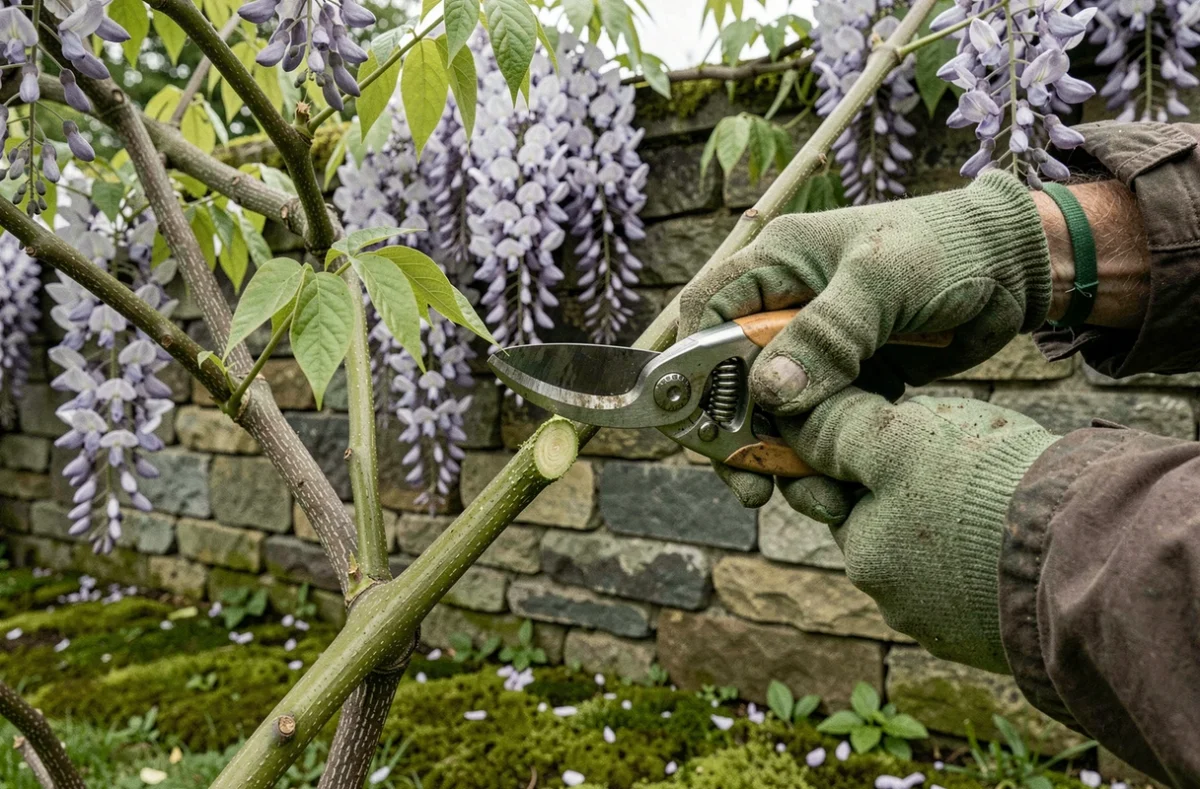
Choosing a non-flowering stem is another condition. A flowering stem directs its energy towards reproduction, not towards root formation. Favor shoots from the current year, semi-hardwood, taken between August and September.
- Use a clean, disinfected pruning shear to avoid any fungal contamination, particularly problematic in aquatic environments.
- Cut just below a node (leaf insertion point), as this is where the cells capable of producing roots are concentrated.
- Remove the leaves from the lower third of the stem to limit evaporation and prevent the plant material from rotting in the water.
- Keep two or three leaves on the upper part to maintain photosynthesis, which provides energy to the cutting.
A stem about fifteen centimeters long, harvested under these conditions, offers the best compromise between energy reserve and rooting surface.
Water propagation protocol: oxygen, light, and immersion duration
While the substrate method remains more reliable, aquatic propagation can work if the weaknesses of the environment are compensated. The main enemy is dissolved oxygen depletion, which encourages bacterial growth and causes base rot.
Change the water every two to three days. This simple action maintains a sufficient oxygen level and limits the proliferation of microorganisms. Use room temperature water, preferably non-calcareous.
The container should be placed in bright indirect light, never in direct sunlight. An east or north-facing windowsill works well. Direct sunlight heats the water, accelerates bacterial multiplication, and burns the remaining leaves.
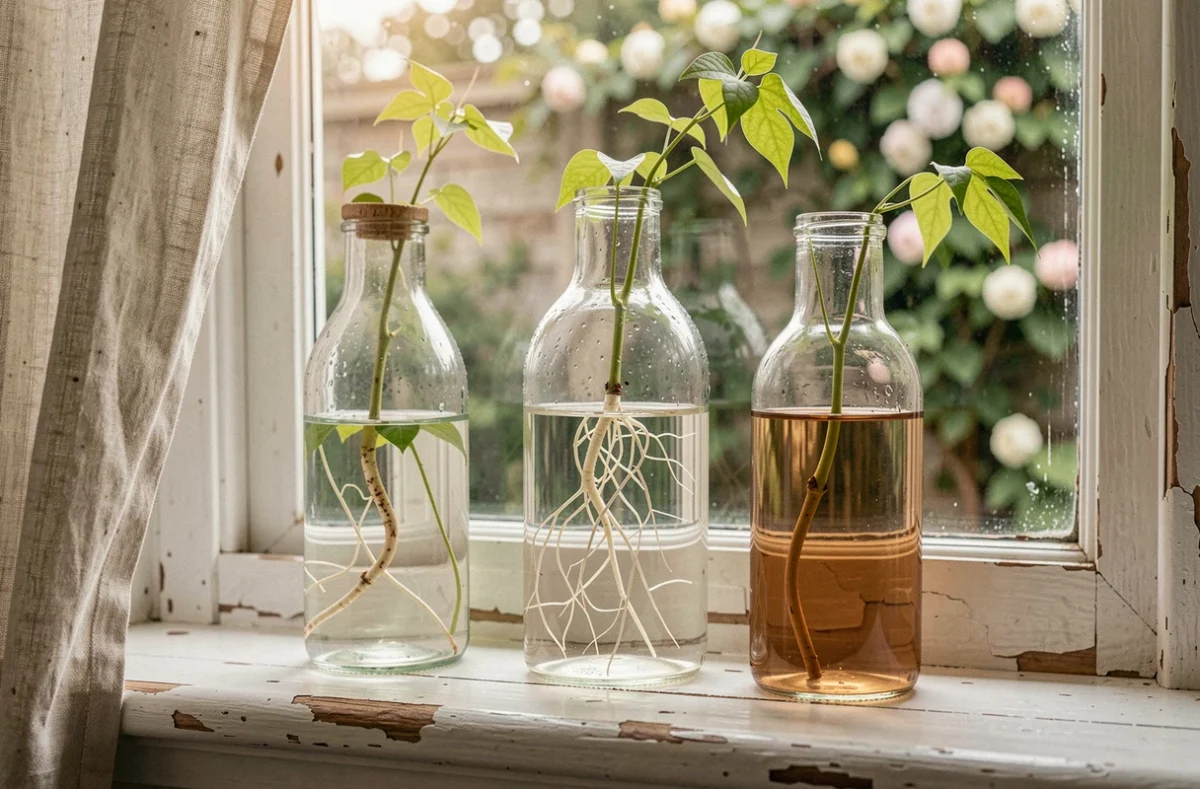
Keep at least one node submerged at all times. It is from this node that the first root hairs will appear, usually after several weeks. Patience is key: wisteria roots much slower than a philodendron or basil.
When to transfer the cutting to soil
The transition from water to potting soil should be early. Roots that are too long, formed in an aquatic environment, lose their ability to adapt to soil. Repotting is recommended when roots reach about 2.5 to 5 cm. Beyond that, the transition becomes riskier.
For the transfer, prepare a mix of potting soil and river sand in a pot with drainage holes at the bottom. Water generously in the first few days so that the cutting does not experience sudden water stress. Place the pot in partial shade for one to two weeks before gradually exposing it to sunlight.
Common mistakes that lead to failure in aquatic wisteria propagation
The first mistake is allowing the water to stagnate for too long. Cloudy or foul-smelling water signals advanced bacterial proliferation. At this stage, the base of the stem is often already compromised.
The second concerns the choice of the stem. A branch that is too woody (hardwood, thick bark) will not develop roots in water. Conversely, a fully green and soft stem risks becoming mushy and breaking. The semi-hardwood stage is the only one that offers a viable balance.
- Do not place multiple cuttings in the same container: if one rots, it contaminates the others.
- Avoid opaque containers that prevent monitoring the condition of the stems and water.
- Do not cut the remaining leaves along the way, unless they turn yellow, as they nourish the cutting.
Some gardeners add rooting hormone powder to the base of the stem before immersion. This practice, common in substrate, is less documented for the aquatic method. The powder dissolves quickly in water, reducing its effectiveness. A rooting gel adheres better, but its use in aquatic environments remains anecdotal.
Wisteria propagated in water requires more vigilance than in substrate, and the success rate remains lower. For gardeners who accept this constraint, the key lies in three points: a morning harvest of semi-hardwood wood, rigorous water renewal, and a transfer to soil as soon as roots of a few centimeters appear. Any further waiting works against the plant.