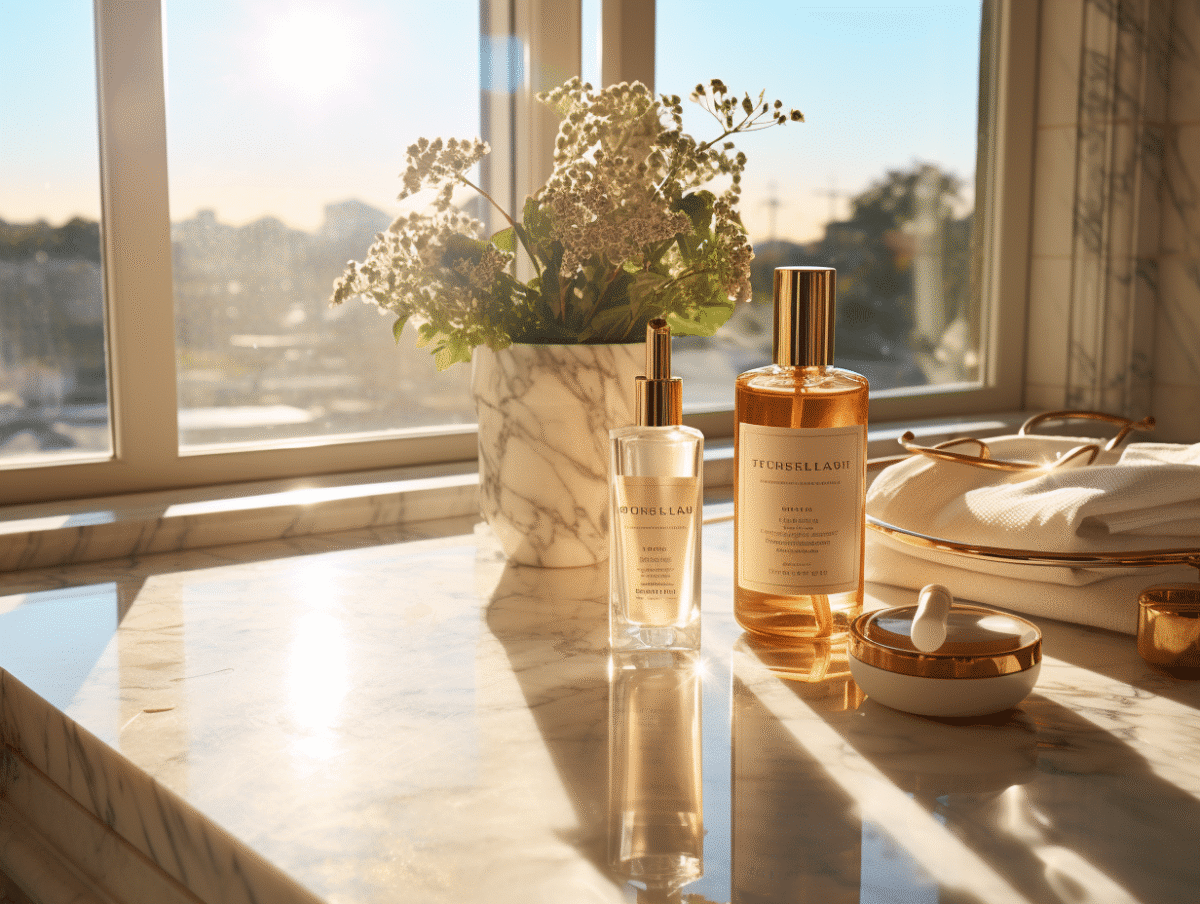
In the complex and saturated world of cosmetics, selecting products suitable for your skin can prove to be a challenge. The variety of formulations, active ingredients, and marketing promises make the decision even more difficult. Consumers often face a dilemma: should they choose organic, chemical, anti-aging, or moisturizing products? To navigate this jungle of products, it’s essential to understand the specific needs of your skin, its reactions to different components, and the environmental impact of your choices. Identifying these aspects is the first step towards a personalized and effective beauty routine.
Understanding the Specific Needs of Your Skin
Accurately identifying your skin type is the foundation upon which any daily beauty routine rests. Terms like ‘combination skin’, ‘normal skin’, ‘oily skin’, and ‘dry skin’ are not just labels: they reflect the intrinsic needs of your epidermis. Oily skin will require non-comedogenic formulas to avoid pore blockage, while dry skin will seek comfort in rich and nourishing textures. Marina Mode, in her latest column, emphasized the importance of this fundamental knowledge as a compass in selecting beauty products.
The daily beauty routine consists of a range of products – cleansers, toners, serums, creams, scrubs, and masks – that must harmonize with the particularities of your skin. Each product has its role: to purify, balance, hydrate, or protect. The interactions between them and their suitability for your skin type determine their effectiveness. Facial care must be chosen wisely; an overly aggressive cleanser on dry skin can do more harm than good, while a cream that is too rich can be the enemy of skin already saturated with sebum.
The facial care suitable for your skin type is not the only criterion for choice. Formulas must address specific needs of the epidermis, such as hydration or anti-aging, while respecting its sensitivity. Beauty products are not universal; what works for combination skin may not necessarily be ideal for normal skin. The relationship between beauty products and skin type is symbiotic: the former must adapt to the latter to reveal their full potential.

Essential Criteria for Choosing Suitable Products
The texture of products is often the first contact between your skin and the applied care. It influences not only the sensory experience but also the effectiveness of the product. A light and fluid texture will be more suitable for oily skin, while a rich and creamy texture will be favored by dry skin. The brand Veld’s, known for its insightful advice, reminds us that the consistency of products is a key factor in their affinity with the skin type.
Beyond texture, the cosmetic formula requires special attention. An analysis of the ingredients allows for the evaluation of quality and effectiveness. Products rich in moisturizing actives for dry skin, non-comedogenic formulas for oily skin, and soothing ingredients for sensitive skin. For those looking to simplify their beauty routine, a 2-in-1 product can combine hydration and sun protection, for example. However, this practical approach should not overlook the quality of the components.
Fans of natural products often turn to organic products, formulated without controversial chemical substances. These products are not only recommended for their skin benefits but also for their lesser impact on the environment. The current trend, supported by eco-responsible brands, encourages us to prefer natural ingredients and recyclable or biodegradable packaging. Organic products thus represent a category of choice for consumers conscious of their ecological footprint and concerned about their skin health.