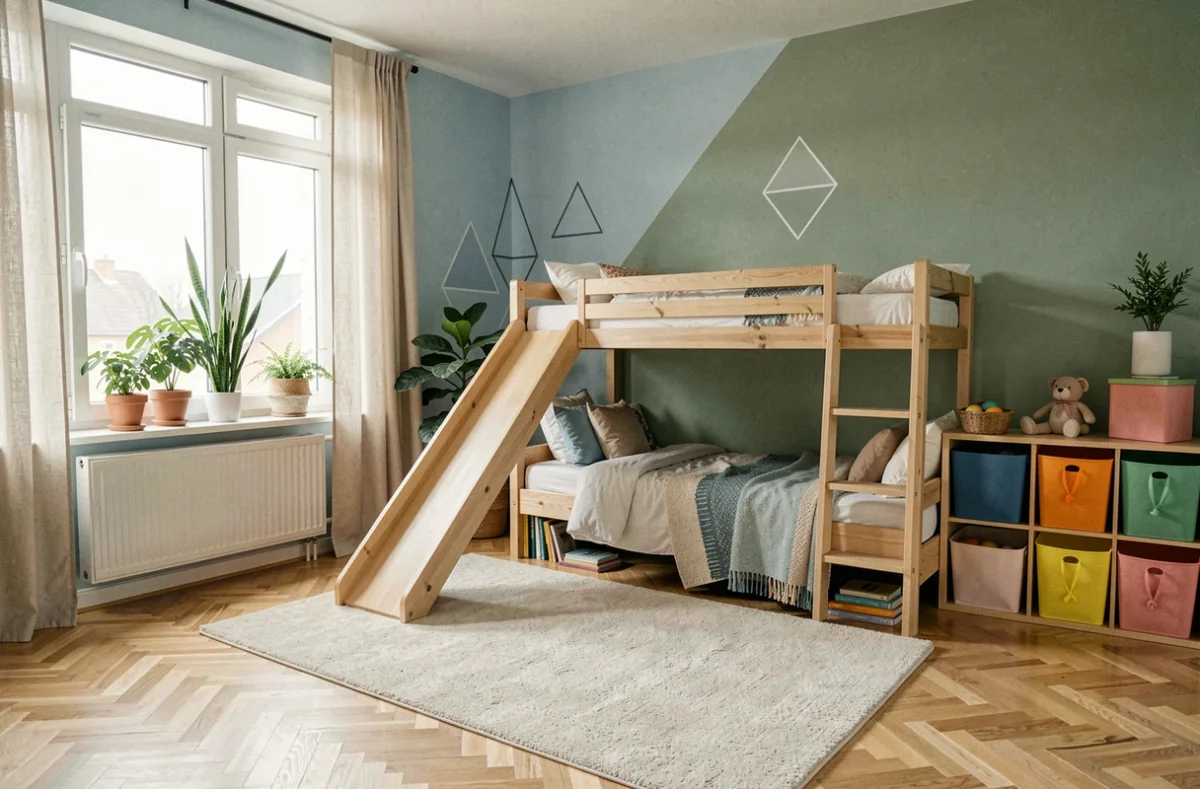
A child entering their room seeks a playground, a refuge for sleeping, and a place to concentrate. Designing a modern and playful children’s room means addressing these three needs without turning the space into a furniture catalog. Choices of colors, furniture, and layout determine daily comfort as well as safety.
Air Quality and Materials: The First Filter Before Decoration
Have you ever noticed the lingering smell of a new piece of furniture fresh out of the box? These are volatile organic compounds (VOCs) released by glues, varnishes, and paints. In a child’s room, where the space often remains closed at night, this concern takes precedence over the choice of wall color.
Recent recommendations suggest favoring products with the French A+ label, which guarantees low emissions of pollutants. This applies to wall paint, the varnish on the bed, the glue for the flooring, and even certain upholstery textiles.
Specifically, when purchasing furniture or a can of paint, turn over the packaging: the emission class (from A+ to C) is indicated on the label. Attractive furniture that is rated B or C degrades the air quality that your child breathes for several hours each night. Style comes after this initial sorting.
To find furniture designed for children’s rooms with a focus on safety and design, a useful resource is: https://www.kids-paradise.fr/.
Colors and Atmosphere in a Modern Children’s Room
The classic reflex is to paint all four walls in a bright hue. The result is often tiring for the eyes, especially in a modestly sized room. A more effective approach is: an accent wall in a bold color, with the other three in a light neutral shade.
A sage green or a muted blue on the wall behind the bed creates a focal point without overwhelming the space. The remaining walls, in off-white or beige, reflect natural light better and visually enlarge the room.
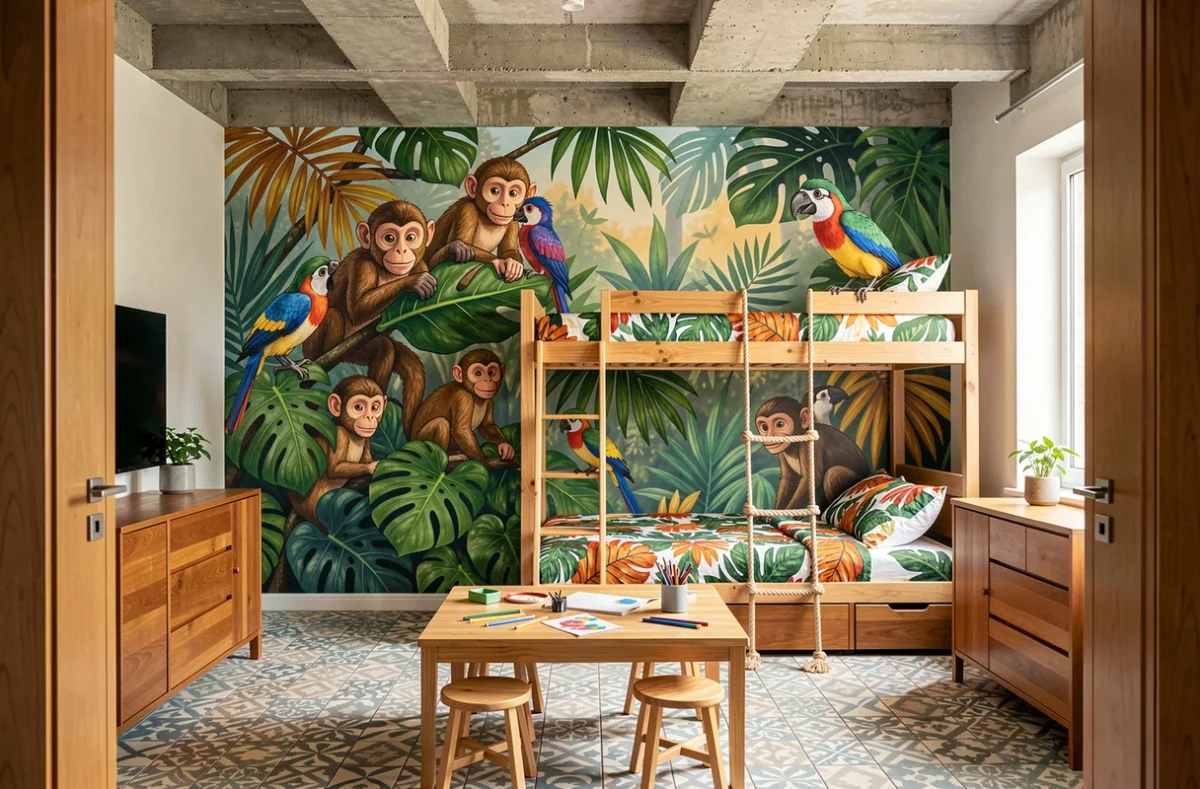
Wall stickers and repositionable wallpaper allow for the addition of a playful pattern (animals, forest, world map) without a permanent commitment. As the child grows and their tastes change, you can remove and replace them. This system avoids the need to repaint every two years.
Age-Appropriate Bed: Safety and Independence
The bed is the central piece of furniture in the room. Why does this choice deserve so much attention? Because a bed that is not suitable for the child’s age can lead to falls or a loss of independence.
Bunk beds are recommended only from the age of six. Before this age, the risk of falling is too high, even with a guardrail. A specialized guide (Soulsens, September 2026) emphasizes the need for a compliant guardrail and a stable ladder for any elevated bed.
For younger children, a floor bed or a low cabin bed offers easy access. The child can lie down and get up on their own, promoting independence without compromising safety. This principle is directly derived from Montessori pedagogy, which advocates for a child-height environment.
Transformable Furniture: An Investment for Several Years
An extendable bed that transitions from baby size to junior size avoids the need for a complete replacement. The same reasoning applies to the desk: a height-adjustable tabletop accompanies the child from kindergarten to middle school. Transformable furniture reduces the number of pieces bought and discarded, aligning with a reuse logic currently encouraged by public authorities.
Wall Fixings and Storage: Safety That Decor Galleries Overlook
Inspiration galleries showcase elegant shelves, designer dressers, and open bookshelves. What they rarely show is how these pieces are secured to the wall.
Public Health France recommends securing any dresser or bookshelf to the wall as soon as the child begins to move. A child learning to walk or climb can topple a piece of furniture weighing several dozen kilos. Anti-tip kits (straps or brackets) are inexpensive and can be installed in a few minutes.
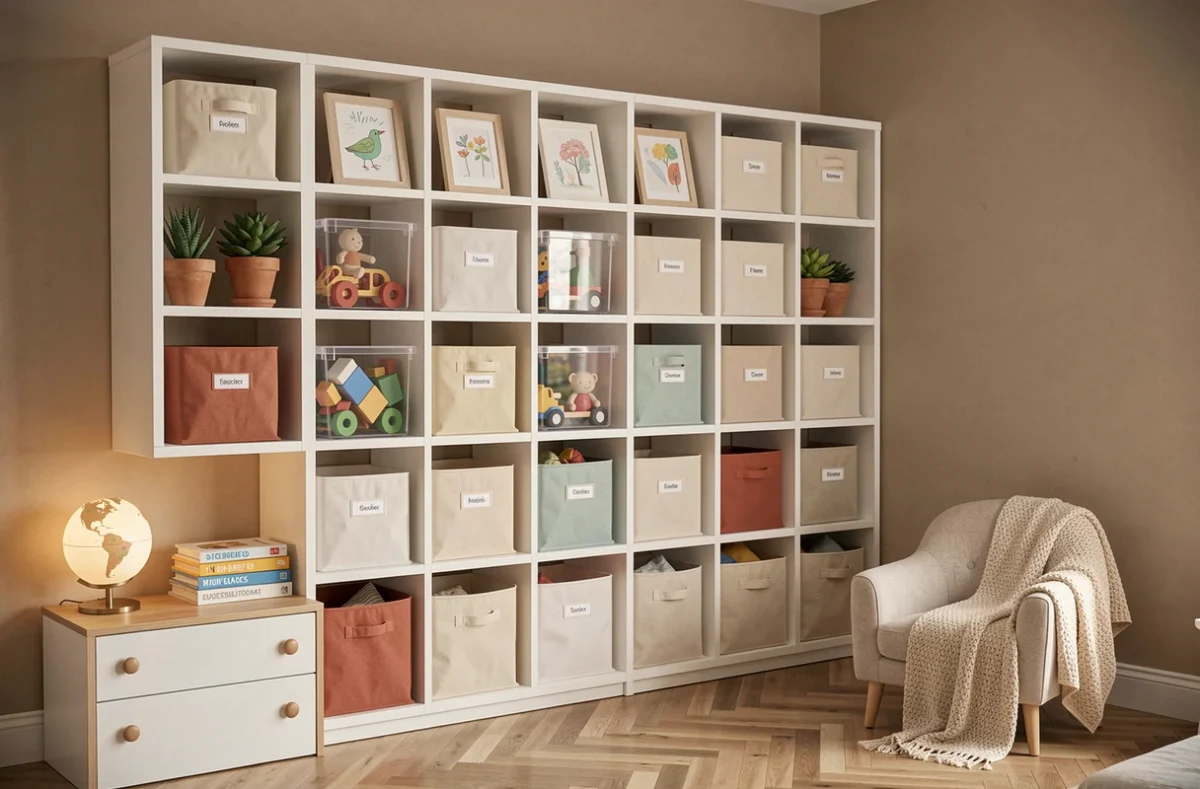
For the storage itself, the practical rule is simple:
- Everyday toys in open bins at child height, so they can put away and access them independently.
- Books on wall shelves facing outward (like repurposed spice racks), not piled in a chest where they remain unseen.
- Fragile or rarely used items up high, out of reach, on securely fixed shelves.
This zoned storage system teaches the child to categorize their belongings. Tidying up becomes a logical game, not an imposed chore.
Activity Zones: Dividing Space Without Partitioning
A child’s room serves at least three functions: sleeping, playing, and working. In a standard-sized room, physically partitioning is impossible. The solution lies in visual division using rugs, wall colors, or a change in lighting.
A thick rug on the floor delineates the play area. An adjustable desk lamp signals the work corner. The bed, placed in the least bright area, marks the sleeping corner. The child intuitively understands which activity corresponds to which place.
The Reading Nook, Often Overlooked
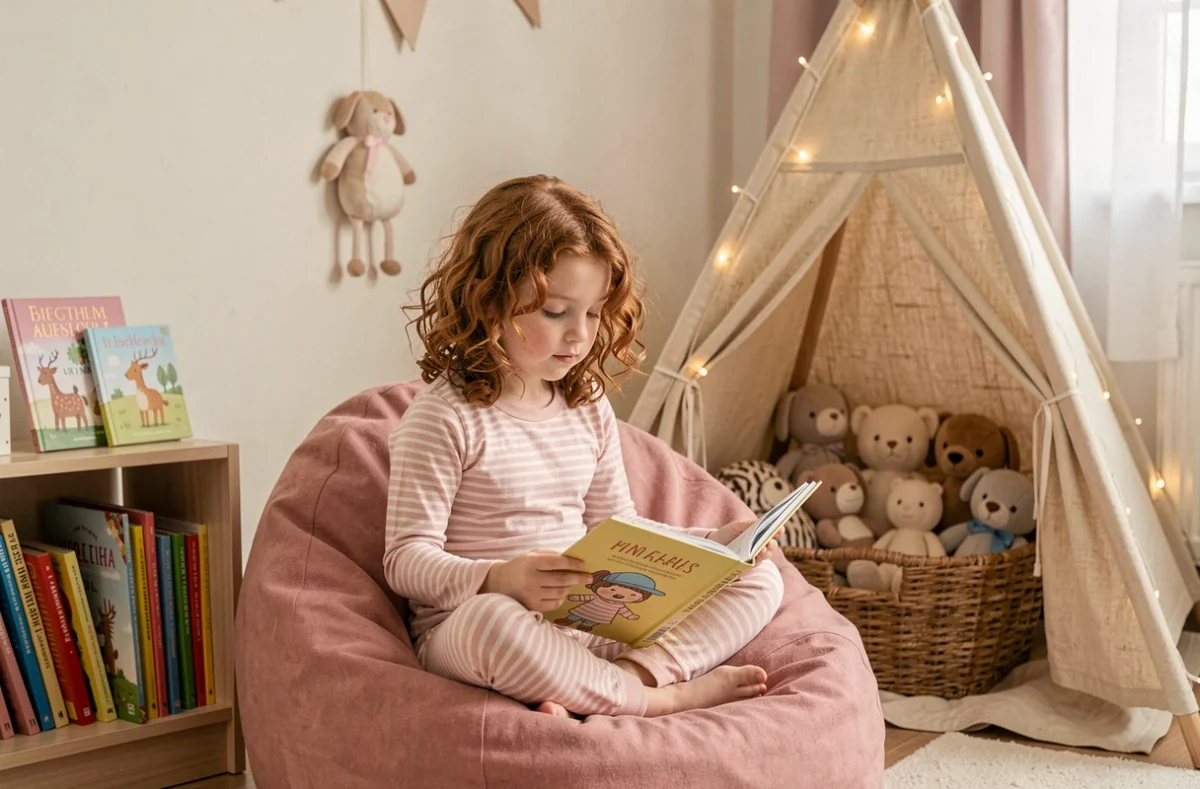
A floor cushion, a small low-voltage LED string light, and two wall shelves are enough to create a distinct reading space. This nook doesn’t need a large area: a corner of the room will suffice. The goal is to make books accessible and the spot comfortable, so that reading becomes a spontaneous choice.
Designing a modern and playful children’s room relies less on the decoration budget and more on a few concrete decisions: checking material emissions before buying, adapting the bed to the child’s actual age, and securing every tall piece of furniture to the wall. Design serves to enhance these technical choices, not replace them.