The bouchon lyonnais and the brasserie lyonnaise share a city, a culinary heritage, and sometimes the same street. Their confusion is frequent, even among the Lyonnais. The distinction is based on specific criteria: menu format, type of service, products used, and room ambiance.
The Bouchons Lyonnais label, a framework that the brasserie lacks
The term “bouchon” is not protected by any state regulation. Over 300 restaurants in Lyon claim this title. To sort through them, the Association for the Defense of Bouchons Lyonnais (ADBL), in partnership with ONLYLYON Tourism, has been issuing the label “Les Bouchons Lyonnais” since 2012.
This label is based on a detailed audit: homemade cuisine, short menu, regional products, and traditional tableware and decor. The city has stabilized the list of labeled establishments and now grants this recognition sparingly.
The brasserie lyonnaise, on the other hand, has no equivalent label. Its operation is only governed by the general rules of the restaurant industry. This creates a clear first line of demarcation: a labeled bouchon has been audited, while a brasserie offering Lyonnais dishes has not. To delve deeper into the difference between a bouillon and a bouchon on Mon Assiette, the topic is addressed from the perspective of the dish itself.
Menu and culinary repertoire: bouchon lyonnais vs. brasserie
The bouchon operates with a short menu, rarely more than ten dishes. The repertoire is codified: quenelle de brochet, tablier de sapeur, salade lyonnaise, cervelle de canut, andouillette, saucisson chaud. These dishes are prepared on-site, using regional products.
The brasserie lyonnaise offers a wider menu. It may include Lyonnais classics but mixes them with nationally or internationally inspired dishes: entrecôte-frites, tartare, burger, fish of the day. The brasserie targets a broader audience and adapts its offerings accordingly.
Products and sourcing
In a labeled bouchon, local sourcing is part of the criteria for awarding the label. Offal, charcuterie, and cheeses come from identified regional producers. The brasserie does not have this constraint. It can serve an industrial quenelle de brochet alongside a daily special with no connection to Lyonnais tradition.
This difference is reflected in the price. The bouchon charges for artisanal know-how and local products. The brasserie, thanks to a diverse menu and a higher volume of covers, often offers more accessible prices on common dishes.
Ambiance and service: two distinct dining experiences
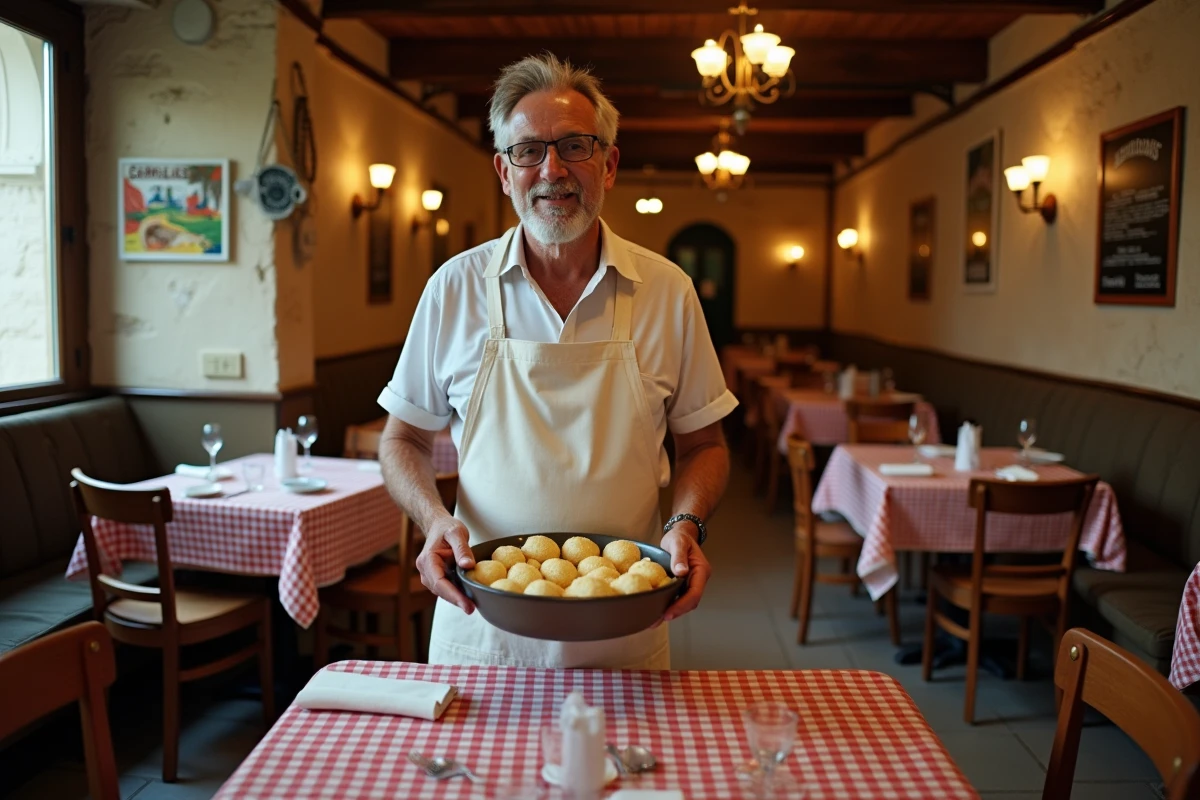
The ambiance is the most immediate marker. The traditional bouchon lyonnais is recognized by its checkered tablecloths, closely set tables, and cluttered decor (vintage posters, Beaujolais jugs, collectible items). The room is small, rarely accommodating more than forty covers. The service is direct, sometimes familiar.
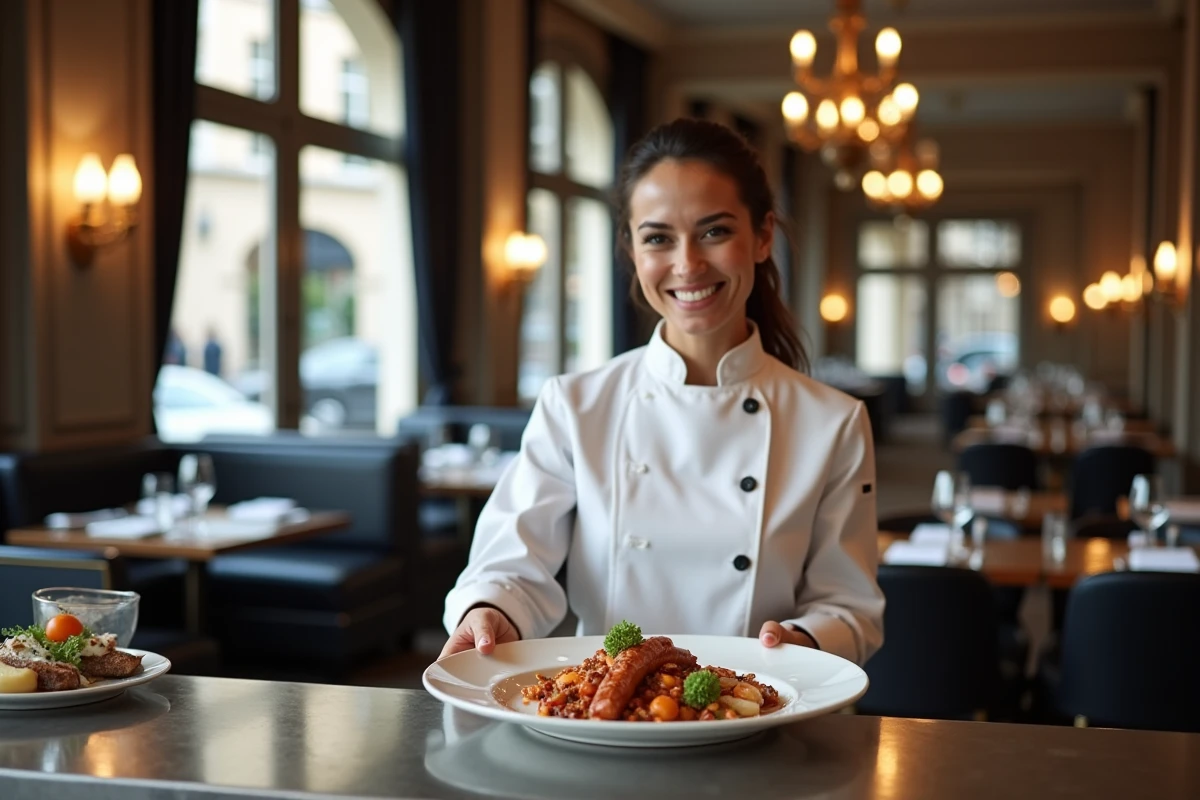
The brasserie lyonnaise occupies a larger space, with an open dining area, a frequent terrace, and continuous or semi-continuous service. The staff follows a classic restaurant protocol. The atmosphere is lively but less intimate.
The relationship with wine
The bouchon traditionally serves wine in a pot lyonnais, a thick-bottomed pitcher of a specific capacity. The wine list favors appellations from Beaujolais and the Rhône Valley. The brasserie offers a more eclectic wine list, including references from all over France.
Néo-bouchons in Lyon: the blurred boundary
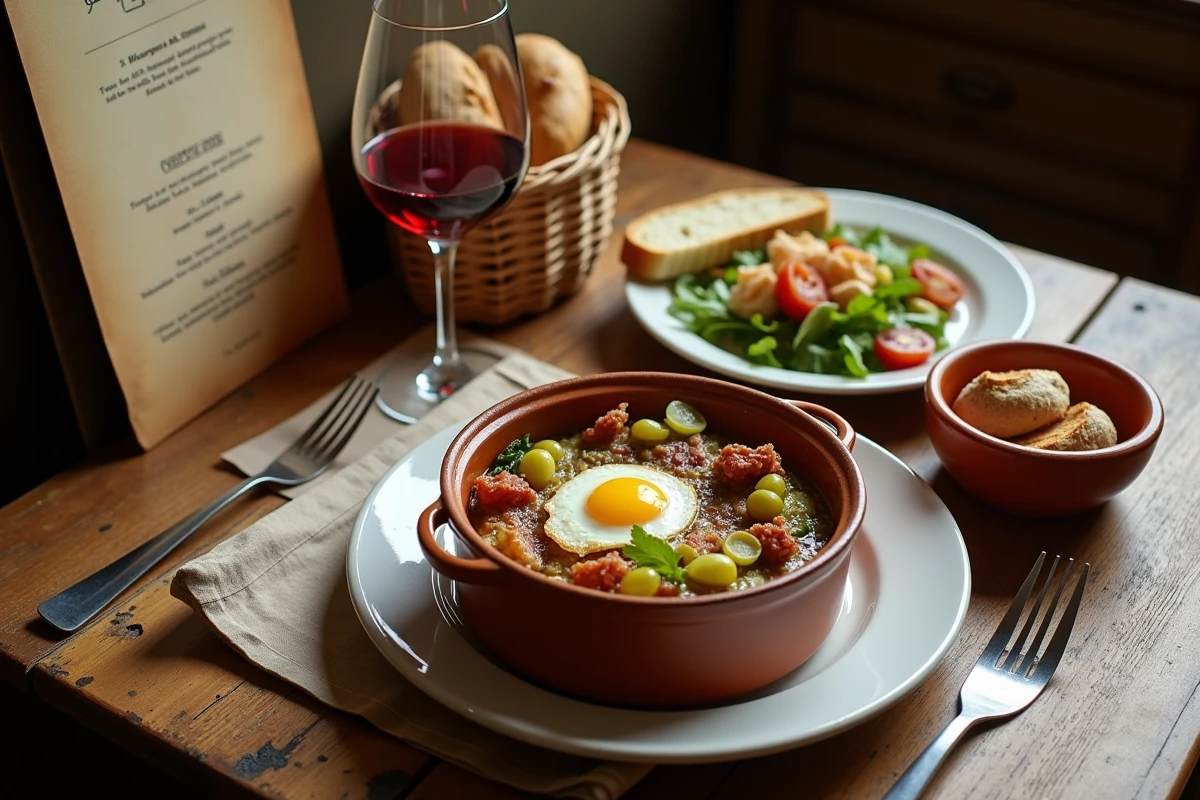
A recent trend complicates the distinction. The néo-bouchons retain part of the Lyonnais repertoire (tablier de sapeur, quenelles, cervelle de canut) but adopt contemporary plating, a short menu focused on natural wines, and sometimes a tasting menu.
These establishments sit halfway between a creative bistro and a traditional bouchon. Their decor is minimalist, far from checkered tablecloths. Their cuisine remains Lyonnais in spirit, but not in letter.
For the customer, confusion increases. A néo-bouchon visually resembles a contemporary brasserie while claiming the heritage of the bouchon. The ADBL label remains the most reliable reference: a labeled establishment meets verifiable criteria, whether it is traditional or modern in its presentation.
Concrete criteria to recognize a true bouchon lyonnais
Here are the points to check before sitting down:
- The presence of the label “Les Bouchons Lyonnais” displayed in the window or mentioned on the establishment’s website, accessible via ONLYLYON Tourism.
- A short menu focused on the Lyonnais repertoire: quenelle de brochet, tablier de sapeur, cervelle de canut, saucisson chaud, gâteau de foies de volaille.
- Wine served in a pot lyonnais, with a selection dominated by the wines of Beaujolais and the Rhône Valley.
- A traditional decor or one that is explicitly acknowledged as such, with a modestly sized room and closely set tables.
- A kitchen that prepares dishes on-site, using identified regional products.
If most of these criteria are missing, the establishment is likely a brasserie lyonnaise, even if it displays “bouchon” on its facade.
Lyonnaise gastronomy thrives in both formats. The bouchon preserves a codified culinary heritage, with rules for the menu and service that clearly distinguish it from the brasserie. The ADBL label remains the only verification tool accessible to the public. For those seeking authenticity in Lyon, this is the first reflex to have before stepping through the door.